A few weeks ago, my colleagues and I attended a three-day course to improve on our understanding, command and usage of Bahasa Melayu so that we could communicate more effectively and efficiently in the national language. For me, it was certainly a process of re-discovering and re-appreciating the strength, beauty and adaptability of the language, which has been the lingua franca of the Malay Archipelago since centuries ago. After all, the last formal training I had -- if you could call that “training” – on my mother tongue was in secondary school. And you would agree with me that we were not taught much then. Whatever little we had learnt, I’m pretty sure we have forgotten, anyway.
During the three-day course, we were exposed to many different aspects of the language, including the national policy on Bahasa Melayu and the policy’s implementation, the language’s functions, its evolution, as well as aspects on grammar and spelling. There was also a module on kesantunan berbahasa, or the gracefulness of and correctness in using the language, in our day-to-day communication and interaction. In fact, the course facilitator dedicated one whole day to discussions on this aspect of the language, and how it builds, forms and shapes our social system, our values, our social etiquette, our character and so forth. I always have a particularly keen interest in this subject and its relation to the Malay kesopanan dan kesusilaan as well as to the universal code of etiquette.
In the Malay community, the norms and messages of the Malay etiquette are manifested in thousands of pantun, proverbs, adages and idioms. But sometimes, the deeper meaning of a pantun or a proverb is lost on us because we do not really understand how or why that particular pantun or proverb was coined, and why certain words or phrases were used. In a pantun, for example, each of the words and phrases, even those in the first two lines of the quatrain, is carefully chosen and carries a significant meaning. Yes, the words and phrases are there not just to rhyme. And most traditional pantun contain much wisdom to guide us in almost all aspects of our life. Just like the concept behind kesantunan berbahasa reminds us of who we are, where we come from, where we are (or should be) going, and how we should get there. Such is the beauty, the richness and the refinement of Bahasa Melayu.
Yang kurik kundi,
Yang merah saga;
Yang baik budi,
Yang indah bahasa.
Of course, as we evolve and change with the time, as does the language, we do not pay much attention to its beauty, richness and refinement. Heck, we don’t even understand certain words or phrases, let alone try to fathom their deeper meaning or significance. And we wonder why there are so many individuals out there in the society who lack budi bahasa or budi pekerti, or both.
Which reminds me of a little conversation I had the other day with a couple of instructors at my fitness club. Apparently they were – they still are -- at their wits’ end on how to handle this particular member who seems to have ditched all tenets of kesopanan dan kesusilaan in her interaction with staff of the club. According to the instructors, they have also received verbal complaints about her from other members of the club. “Rude”, “loud”, “sarcastic”, and “caustic” are just some of the favourite adjectives they closely associated with her. I, too, had had the displeasure of interacting with her, when she decided to bulldoze her way into a conversation that she was never a part of in the first place. And the remark that she passed was downright rude and uncalled for. Her incessant chatter, and always about herself, drive some members of the gym up the wall. Nowadays, I steer away from her whenever I see her in the club. I am also considering wearing a pair of really effective earplugs.
Tingkap papan kayu bersegi,
Sampan sakat di Pulau Angsa;
Indah tampan kerana budi,
Tinggi bangsa kerana bahasa.
I suppose we can never stress enough on the importance of budi bahasa and budi pekerti as they say a lot about a person. I’m not sure whether people still do this, but when I was growing up, my parents and relatives were always reminding me to “bawa diri baik-baik” whenever I returned to school after term breaks, or before I left home for extended visits somewhere. Even when I was in university, letters I received from home always ended with the phrase, or its variations. Although short, it went a long way in reminding me of how I should behave and carry myself wherever I was. It still works for me, and it has become my own favourite piece of advice.
Now, I wonder whether anyone has ever told our good friend at the gym to “bawa diri baik-baik”, but the next time she steps on my toe, I’m just going to look squarely at her in the face and say, “Yang kurik kundi, yang merah saga….”, and hope that she’d get it. If that fails, I’d go the whole hog with this lightly veiled threat:
Ubi keledek dibuat pengat,
Mari dimakan di bulan puasa;
Wahai cik adik hendaklah ingat,
Kerana mulut badan binasa.
ESCAPING CLUELESSNESS
MALAYSIANS ARE NOT RUDE
- Malaysians ALWAYS say "Thank you" and "You are welcome" when other people do something nice for them. The most excellent examples are the sales people in our shopping malls. They are SO polite and DO NOT snigger at you even when you do not buy anything at their shops. Same thing goes to our toll booth operators. They smile and thank you ALL the time after collecting your money. And those waiters and waitresses, they are ALL gems, our little ambassadors of politeness and good manners.
- Malaysian drivers NEVER cut queues, especially during horrendous traffic congestion. Everyone will wait patiently for his/her turn. They NEVER, EVER use emergency lanes to cilok.They ALWAYS give way to other drivers who signal to change lanes. And they ALWAYS use their indicators when they want to turn. Their indicators are NOT for decoration only. They ALWAYS give way to pedestrians at zebra crossings. Slow drivers NEVER hog the fast lanes. Malaysian drivers ALWAYS adhere to speed limit, and they ALWAYS pay their speeding tickets or fines on time.
- Malaysians ALWAYS open doors, or hold open the doors for other people, especially for ladies and old people, or people with babies or small children, or people with lots of things in their arms/hands. They NEVER let the doors slam into these people's faces.
- Malaysians NEVER spit in public, in the elevators, or on the road while stuck in traffic jam. They also NEVER pick their noses or ears in the car while stuck in traffic jam.
- Malaysians ALWAYS dispose of their rubbish properly. They NEVER while driving wind down their car window and chuck out fruit peels, plastic wraps, tissue paper, drink cans, cigarette butts, empty mineral bottles etc. And these things NEVER hit the car or cars behind them. And if they live in high-rises, they will NEVER, EVER throw garbage out of their windows, especially things that could potentially hurt somebody down below.
- Malaysians also ALWAYS pick up things they drop, especially if these are the things that should go in the trash bin. And when they knock into something in a shop, they will ALWAYS pick that something up and put it back in its proper place.
- Malaysians ALWAYS smile back and ALWAYS warmly respond to greetings from airline crew when they fly. When people smile or greet them, Malaysians NEVER think that they are being hit upon.
- Malaysians NEVER rush into elevators. They ALWAYS wait for those passengers already in the elevators to come out first before they enter. And when using escalators, they NEVER stand side by side with their friend(s) on the escalator, but will ALWAYS let other people who are in a hurry to pass.
- Malaysian taxi drivers are ALWAYS honest. They ALWAYS use their metres and NEVER try to cheat or over charge their passengers, especially if the passengers are foreigners.
- Malaysians ALWAYS have impeccable table manners. They NEVER overstuff their plates at the buffet line. They NEVER speak with their mouths full. They NEVER spit out chicken bones onto the dining table, and they NEVER drink their soup with a straw. Eh, no, I'm confused. It's Singaporeans who NEVER drink their soup with a straw.
- Malaysian Muslims ALWAYS think of their Hindu brethrens when they invite them to their parties and NEVER serve beef at the parties, much like the non-Muslims who NEVER serve pork at parties they invite their Muslim friends to.
- Malaysian traders at China Town or Chow Kit are ALL so very, very polite, they NEVER curse at you or call you horrible names if you don't buy their imitation goods.
- Malaysians NEVER talk in the cinema during a movie. They ALWAYS switch off their cellphones and NEVER take calls. And if they accidentally do, they ALWAYS stop when fellow cinema-goers ask them to. They also NEVER leave behind garbage -- popcorn tubs, paper cups, etc -- after a movie.
- Malaysians NEVER bring their domestic help or maids to parties at friends', especially when they know that the parties are meant for, well, friends. And ALL Malaysians who have maids treat their maids very well. They NEVER abuse them, pour hot water on them, and NEVER, EVER hit them with hot iron.
- Malaysians NEVER bring durians into hotels or into any other buildings, for fear that other guests or their colleagues would suffer migraines or nausea upon smelling the fruit's wonderful and universally loved aroma. They ALWAYS adhere to signs at buildings that prohibit the fruit.
- Malaysians ALWAYS queue up properly at train stations or bus stops. They NEVER fight for seats and ALWAYS give up the seats to the elderly, pregnant ladies, handicapped OKUs, especially if these seats ARE already meant and marked for these people.
Well, these are some of the proof (and the list does not end here), mainly from personal observation, that I could think of. So, they prove that Malaysians are NOT rude.
Right.
IN THE PUBLIC INTEREST. REALLY.
TO KONGSI, OR NOT TO KONGSI
WE ARE A SENSITIVE LOT ... NOT
PROGRESS AND THE POLITE SOCIETY
MORE WASTAGE...
STILL A NATIONAL AGENDA
NATIONAL TOILET SUMMIT? REALLY...
WHAT'S IN THE NAME, YOU SAY?
PROPAGATING SUBSIDY/WELFARE MENTALITY
The good people at ASTRO recently introduced the 20 candidates shortlisted to try out as the 12 finalists for Akademi Fantasia 4. A lot of newspapers wrote about this, and carried the pictures of the kids. That means the reality programme will start soon.
EDUCATING MALAYSIAN DRIVERS
- Emergency lanes are for people to stop their vehicles in real emergencies, not for ciloking other vehicles.
- Hazard lights should be turned on only when vehicles are stationary, not when you're doing 60kmh during heavy rain.
- Slow pokes should drive on the left lane, and not hog the fast lane.
- Right/left indicators are not ornamental in purpose.
- Zebra crossings are meant for people to cross the road, so please stop when you see people crossing. They are never meant for zebras.
- Don't pack more than four (I've seen as many as seven) people in a Kancil.
Of course, like many other educational lessons, you tend to forget what you learn.
For this, I have a very simple solution. Stop selling cars to stupid people. Make them take a test or something, to prove that they're in fact have a bit of brain before they get to drive.
GOODBYE RIFF RAFF, HELLO WELL-HEELED
 There will be condominiums, townhouses, hotels, shopping complexes, service apartments, offices -- all come with the adjective mewah. I suppose the demand for luxury living and lifestyle is ever on the rise. So, get rid of the riff raff. Let them go stay in the backwoods of Setapak Jaya for all DBKL cares. Bring in the well-heeled.
 WASTAGE WASTAGE
 I was in Johore over the Wesak Day weekend to attend a friend's wedding. Finally, the guy got hitched, much to the delight of his family, no doubt. I wish him and the wife well.
  "So much wastage we have in Johore," said my sister, gesturing now to a row of potted plants lining one of Kluang's thoroughfares. The money, she said, should have been spent elsewhere.
 HAPPY BIRTHDAY UMNO...OR NOT
Today a local tabloid carried an article on the lack rubber (spray) hoses in the toilets of a leading shopping complex for people to wash their behinds (and private parts) after they finished doing their business. Wah. Big issue.
 Ours is becoming really a classless society. No, not the type advocated by Marx -- we all know what DID NOT happen with communism. I'm talking about a society whose members are ditching all social norms, values and etiquette, about people who have no manners and are just plain rude. People yang takde kelas....
 What's happening? Weren't we supposed to be a people steeped in kesopananan and kesusilaan, so rich with budi bahasa and pekerti mulia? Whether we are Melayu, Cina, India, or Lain-Lain -- we all clung (or at least our parents and their parents, and the parents of their parents, did) to a set of values that shape and define who we are and how we interact with other people.
  I wonder what parents are teaching their kids nowadays. Not much, I suppose. Especially when the parents themselves are not the best of examples. Most are too busy or too ignorant to care. And they keep breeding. Rabbits after rude rabbits.
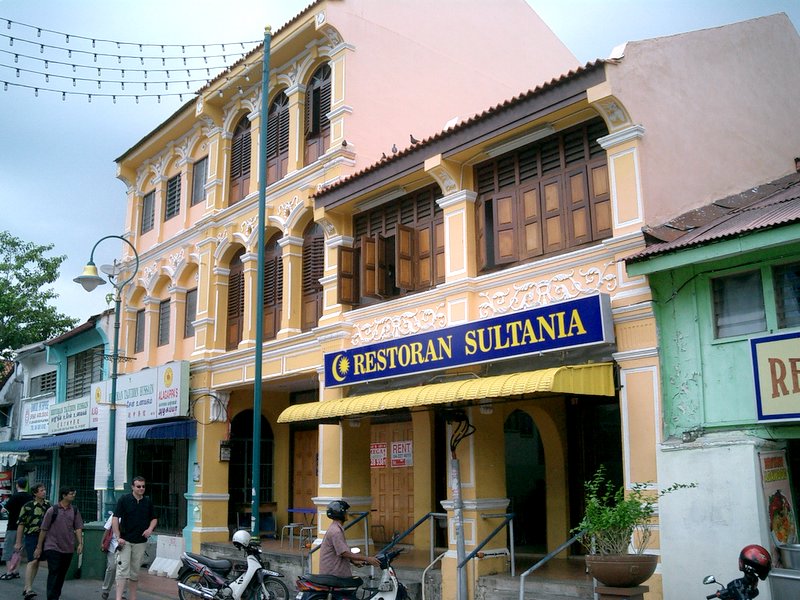
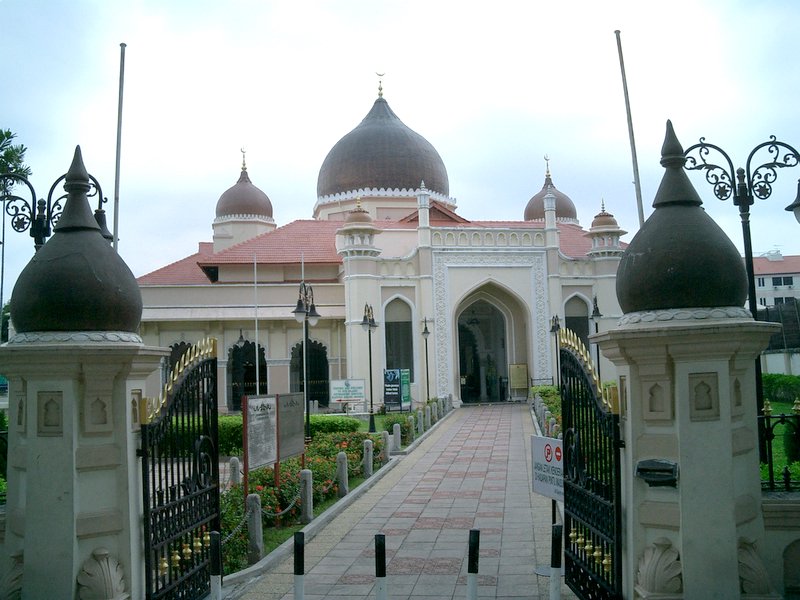
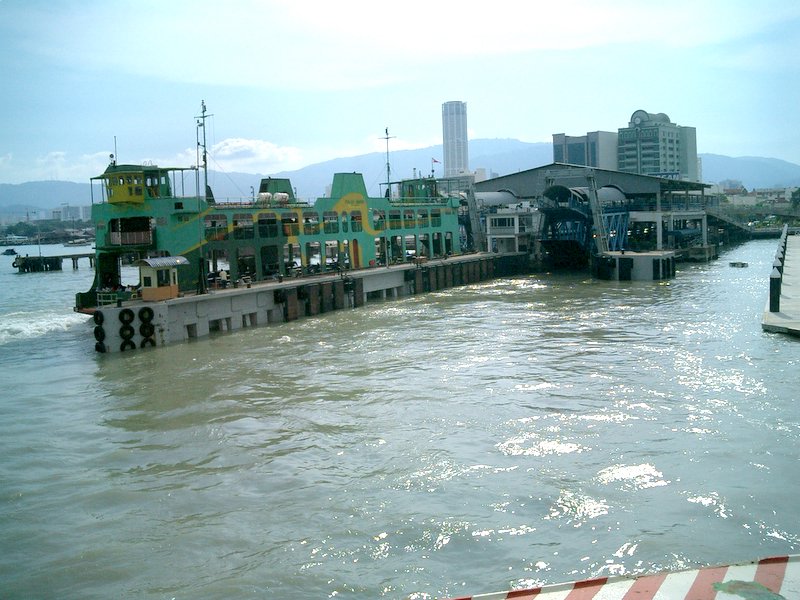 Over the Labour Day weekend, I went to Penang -- you know, the so-called Pearl of the Orient (although personally I think the lustre has long gone) -- for a wedding. The last time I toured the island (short nasi kandar-makan stops don't count) was 13 years ago, so I looked so much forward to the trip. Besides the makan-makan, which my traveling companion really relished in, there were lots of other things and places to do and see. All in all, it was rather enjoyable. Until I did a bit of post-trip accounting, that is.
  Talk about petrol, I wasted a lot of it when that fuel-guzzler of mine got stuck in traffic due to some demonstration over fuel price hike. OK la, to protest is good, I suppose, after all we should all root for the freedom of expression, and this is a free country, relatively speaking. So, I just parked my vehicle on the road side, and watched the demonstrators. One thing struck me, though. I wasn't clear whether they were protesting against the government or Petronas. To me, if protestors want to protest, they have to make sure that they're protesting against the right party. This way, they would get their issues and messages right. Otherwise, the issues and messages will bercampur-aduk and will confuse people more. I'm all for the freedom of expression, but I'm also for taking accountability for what you say. We can't all be like politicians. Some of us have to be responsible, so tak elok cakap sesuka hati without getting our basic facts right.
 A lot of people marah-marah because fuel prices went up, and a lot were also angry at Petronas. Mana pegi keuntungan Petronas? What happens to Petronas' money? Why can't Petronas subsidise prices? Watching the protestors that day, I think a lot of people missed the point.
  Hish, kalau betul la apa yang newspapers cakap, I wonder mana pegi RM31 billion tahun lepas? Mana pegi RM250 billion yang dah dibayar since 1974? Kalau la sebegini banyak, kenapa must I still pay income tax????